For more than a century, visitors to the Blue Ridge have looked toward a low ridge in western North Carolina and waited for lights to rise above it. The Brown Mountain Lights are the state’s best-known ghost lights, tied to Native American, enslaved and murdered ghosts depending on who tells the tale. They have also been studied by the federal government since 1913. This post separates the stories from the investigations, including one later camera recording that researchers still call unexplained.
What the record shows
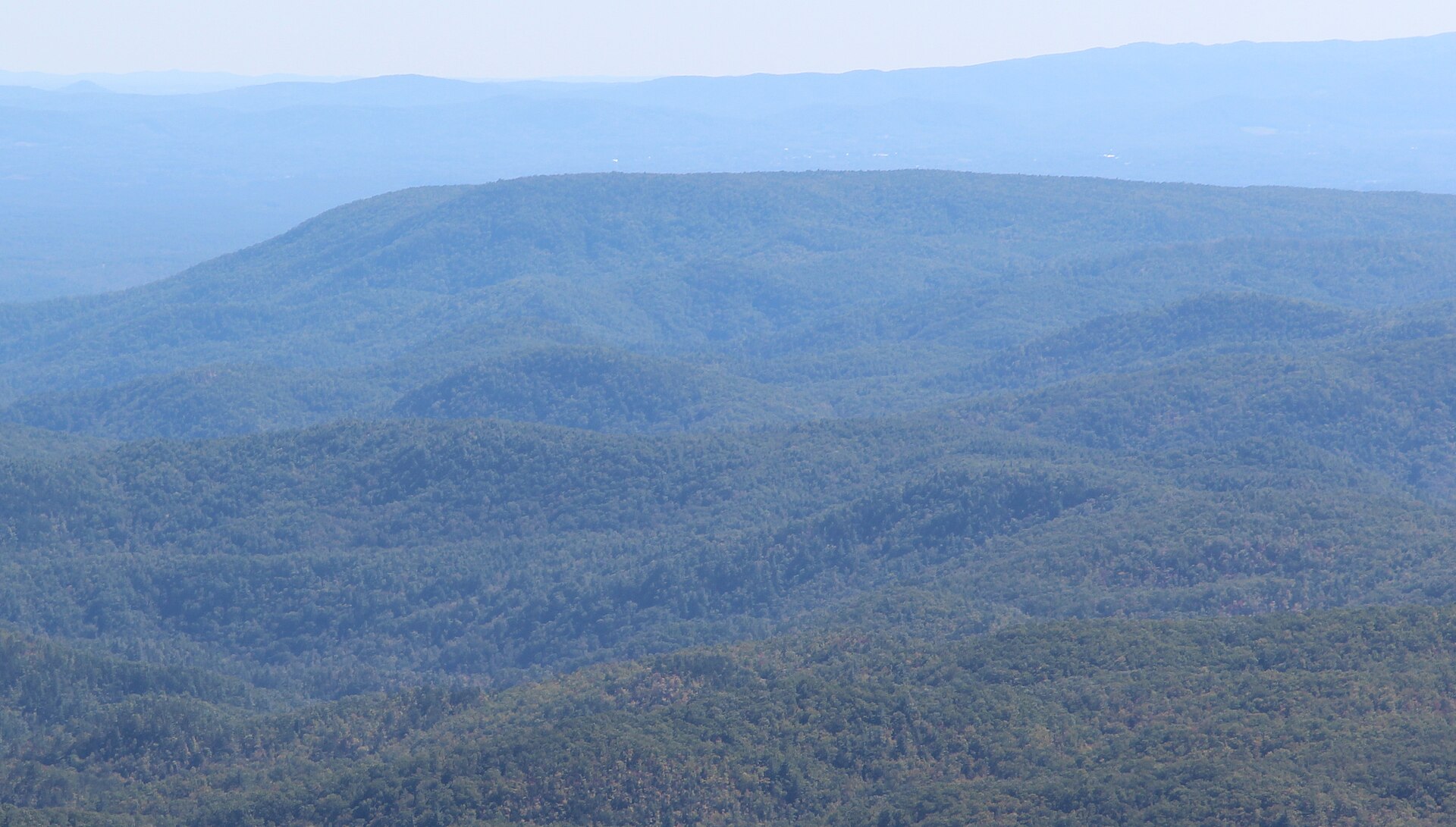
Brown Mountain stands in the Blue Ridge of western North Carolina, about 12 miles northwest of Morganton. The U.S. Geological Survey, in a 1922 investigation reprinted in 1971, placed it in the northern part of Burke County. The state encyclopedia, NCpedia, places it on the Burke and Caldwell county line. NCpedia describes the lights as low in the air, growing, lingering a few minutes and fading, mostly white with an occasional red, blue or yellowish tinge, seen most often on clear, warm summer evenings.
The earliest published references are later than some of the legends suggest. NCpedia says the lights have been “documented since 1833.” Wikipedia reports that the earliest published mentions date to about 1910 to 1913, and that travel writing about the region before 1900 does not mention unexplained lights. The Survey’s own account agrees on the later timing: its report says the lights began to gain notoriety around 1910, and a Charlotte newspaper article from September 1913 described lights seen night after night. The National Park Service, on its page for the Lost Cove Cliffs Overlook, likewise dates claimed sightings to “at least 1910.”
The government looked twice. In October 1913, at a North Carolina congressman’s request, a USGS geologist spent a few days there and declared the lights were locomotive headlights seen over the mountain. When lights were still reported after a flood in 1916 stopped train service, some who had accepted that explanation abandoned it. In 1922 the Survey sent another geologist, George R. Mansfield, who spent two weeks in March and April and watched on seven evenings, using a telescope and maps. His report, reproduced by the Survey in 1971, traced lights to the headlights of locomotives and automobiles, and to stationary lights and brush fires. About 47 percent of the lights he could study instrumentally were automobile headlights, 33 percent locomotive headlights, 10 percent stationary lights and 10 percent brush fires. He wrote that atmospheric conditions in the basin below the mountain make distant lights flare and fade, and that no geologic basis supported the lights as a natural wonder. He also noted that powerful locomotive headlights began to be used about 1909, with automobile headlights following.
The Park Service, writing for visitors today, reaches a similar conclusion: various studies indicate that reports are likely describing ordinary occurrences such as vehicle headlights, even as people remain fascinated by the lights.
The legend
The folklore is later than the first investigations. NCpedia says folklorists credit a Native American brave searching by torchlight for his lost love. Other versions include:
- A faithful servant: A 1961 bluegrass song about the lights, later widely recorded, has the light carried by an enslaved man returned from the grave to look for his master, according to Wikipedia.
- A murdered woman: Wikipedia, drawing on later historical work, says a variant of an older ghost story about a woman and baby killed in the Jonas Ridge community became the first published ghost story tied to the lights, in 1936.
- The 1854 flash: A Wiseman family tradition, not published until 1971, says a young man camping at Wiseman’s View around 1854 saw a flash of light at the same spot each night.
Each story is told by tradition, newspapers or songwriters, and none comes with a contemporaneous record. Wikipedia says the 1961 song greatly popularized the lights, making them the best-known ghost story in North Carolina.
What the record does not support
The Native American story is the clearest case of folklore outgrowing its evidence. Wikipedia says the first published claim that a Native American culture referred to the lights appeared in a 1938 newspaper article, with no source, and that experts on Native American traditions describe it as a myth invented by white writers to support their own beliefs.
The widely repeated claim that a surveyor in the 1770s described the lights fares no better. Wikipedia quotes the passage, from a report by William Gerard de Brahm, and says it is about thunderstorms and mountain air, in a chapter on South Carolina, by a man who may never have been in North Carolina. The 1854 flash, if the date is even roughly right, fits an ordinary train: Wikipedia notes that the first train in western North Carolina began nightly service in 1858, and that the light in the family story appeared at regular times.
The later research record is more open than the early answers alone would suggest. A physics and astronomy team at Appalachian State University ran low-light cameras at viewpoints overlooking Brown Mountain and Linville Gorge. By 2014, Wikipedia reports, they had logged about 6,300 viewing hours with no unexplained light. In July 2016, however, both cameras recorded a stationary light that came on and went off four times over several minutes. A researcher told a local television station the team had eliminated likely natural and human sources, leaving no good explanation. He listed ball lightning as one possibility. Ball lightning is poorly understood, so that remains a hypothesis, not a finding. It also does not undo the Survey’s conclusion about the lights people were seeing in 1913 and 1922.
Visiting
The National Park Service names the Lost Cove Cliffs Overlook, at milepost 310 on the Blue Ridge Parkway, as a place to look for the lights after dark, and it asks visitors to check conditions before traveling. Wikipedia also lists the Brown Mountain Overlook at milepost 310, the Green Mountain Overlook at milepost 301, and an overlook on North Carolina Highway 181 near Jonas Ridge. Lights have also been reported from Table Rock and Wiseman’s View in the Linville Gorge Wilderness. Those are public parkway and national-forest viewpoints, not private land. Stay in official parking areas and overlooks; do not walk off-trail after dark or trespass on adjoining property.
No current hours or seasonal closures are given here, because they change. Check the National Park Service for Blue Ridge Parkway road status, and the U.S. Forest Service for Linville Gorge, before you go. The area is rural, the overlooks can be cold and dark, and cell service can be thin. Bring a charged phone, watch for other cars in pull-offs, and keep expectations modest. Most lights people see, the Survey and later researchers have argued, are ordinary ones.
Nearby, the Linville Gorge Wilderness, Table Rock and Wiseman’s View are scenic destinations in their own right, and Morganton is the closest larger town.
Frequently asked questions
What are the Brown Mountain Lights?
Lights reported over Brown Mountain in western North Carolina. Published accounts start around 1910 to 1913. Federal investigations in 1913 and 1922 traced the lights then being seen to trains, automobiles, stationary lights and brush fires.
Have the lights ever been explained?
Mostly, yes, for the historic reports. Researchers say most lights people see are ordinary ones, though one 2016 camera recording remains unexplained.
Are the Brown Mountain Lights a Native American legend?
Wikipedia says the claim first appeared in a 1938 newspaper article with no source, and that experts on Native American traditions call it a myth.
Where can the Brown Mountain Lights be seen?
The National Park Service names the Lost Cove Cliffs Overlook at Blue Ridge Parkway milepost 310. Other sources also name overlooks at milepost 301 and on North Carolina Highway 181, plus Table Rock and Wiseman’s View.
More haunted roads: Interstate 65 (Evergreen, AL) and Highway 11 (Decatur, AL).
Sources
- U.S. Geological Survey Circular 646, “Origin of the Brown Mountain Light in North Carolina”: the 1922 investigation by George R. Mansfield, reproduced in 1971.
- NCpedia: Brown Mountain Lights: the state encyclopedia entry on the lights, their appearance, folklore and the Lost Cove viewing site.
- National Park Service: Lost Cove Cliffs Overlook: official parkway page for the milepost 310 overlook, including a note on the lights and a request to check conditions.
- Wikipedia: Brown Mountain lights: history, folklore, later research and additional viewing locations.
- WLOS, August 13, 2016: “ASU scientists think they’ve captured images of WNC’s unexplained Brown Mountain Lights”: report on the July 2016 dual-camera recording.
Top image: Brown Mountain, North Carolina viewed from Beacon Heights, October 2016, Thomson200, CC0, via Wikimedia Commons. The lights are not visible in this daylight photograph.