
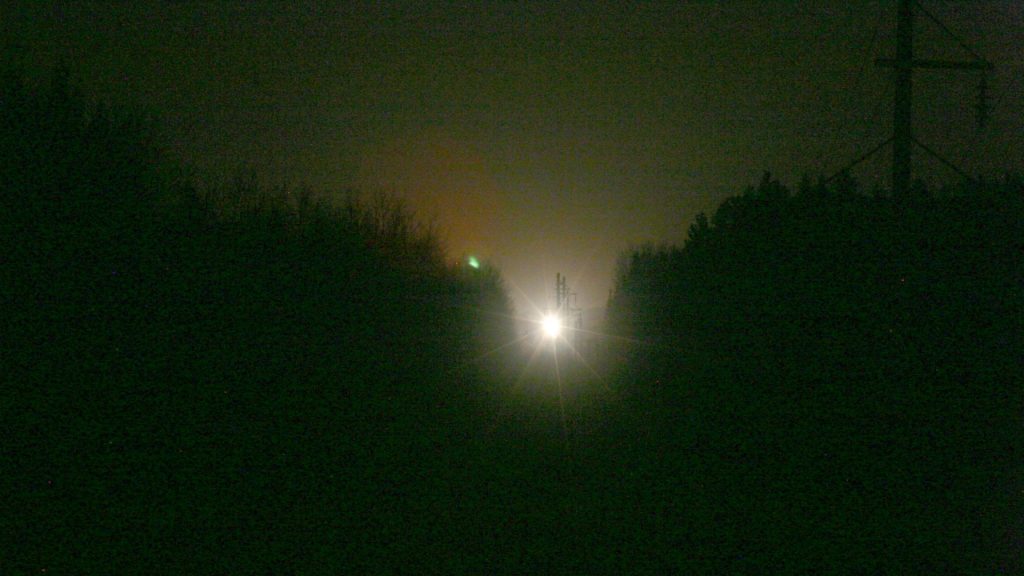
On a gravel dead end in Michigan’s Upper Peninsula, visitors gather after dark to watch a light appear in the distance, swell, change color and fade. The Paulding Light has been described as a brakeman’s lantern, a mail carrier’s ghost and a mystery with no explanation. It has also been tested, more than once, and the testers all reached the same answer. This post lays out what is known, what is told and why the legend keeps going.
What the record shows
The Paulding Light is seen from Robbins Pond Road, a former stretch of US 45 between Watersmeet and Paulding in Ontonagon County. The county chamber of commerce says the light can be seen nightly from there, and Atlas Obscura describes the approach as a gravel road that dead ends not far off the highway. Wikipedia names it the Paulding Light, the Lights of Paulding and the Dog Meadow Light.
Michigan Technological University published an account of the light in October 2010 after student members of its optics society investigated it. Those students brought a telescope to the viewing area. Through it, according to the university’s news story, they saw “headlights. On a car. Traveling down a highway.” They traced the source to a stretch of US 45 and spotted a roadside Adopt-a-Highway sign in the scope. One student logged the time each car passed that spot, while others in Paulding recorded when the light appeared, and the times matched. A driver then flashed his hazard lights on the highway, and the students saw flashing yellow lights in the distance.
The students also offered explanations for what looks strange. A hill on that part of US 45 makes the lights rise, fall and stop as vehicles travel it, and the lights change in intensity as drivers switch between high and low beams. The multicolored lights sometimes reported were attributed to police cars stopping traffic, and the university story says objects seen without a frame of reference often seem to drift. An inversion layer in the air, a stable layer that can help distant lights stay visible, was proposed to explain how the highway can be seen from about four and a half miles away. Wikipedia says about five miles.
The legend
The legends are told by locals and visitors, and no source documents any of them. The most popular, repeated by Wikipedia and the county chamber, concerns a railroad brakeman killed while trying to stop an oncoming train. In that version, the valley once held tracks, and the light is the brakeman’s lantern, still swinging. The chamber’s version calls him a decapitated railroad watchman. Other tellings include:
- A mail carrier: A mail carrier killed while crossing the swamp in the 1870s, according to the chamber.
- A grandparent: A grandparent searching for a lost grandchild with a lantern that needs constant relighting, which explains why the light seems to come and go. Wikipedia credits this to a newspaper article.
- A Native American figure: Some retellings place a Native American man, even a chief, in the story, said to be angry or dancing on the power lines. The sources that repeat it do not tie it to any tribal account or document its origin.
Beyond ghosts, popular explanations include swamp gas and radioactive gas escaping cracks in the ground after earthquakes. The chamber’s page lists those, noting that the light has been seen in winter when swamps are frozen. It calls the radioactive-gas idea “unprovable.”
What the record does not support
No source reviewed identifies the brakeman by name, dates the accident or points to a newspaper report or railroad record. The tracks, in the legend, are said to have run through the valley, but none of the pages supply a map or a date. The mail carrier story is equally undated beyond “the 1870s.” Anyone repeating these should call them legend.
The age of the light is disputed. The county chamber says the light was seen before automobiles existed, and Atlas Obscura relays local claims of sightings around the turn of the twentieth century by people walking to the Watersmeet train depot. Neither source gives a named witness. The university’s account says the first reported sightings came soon after that stretch of highway was rerouted, and that visitors to Robbins Pond Road, a popular make-out spot in the university’s words, began talking about the lights in the 1960s. Wikipedia says the first recorded sighting was in 1966, when teenagers reported the light to a sheriff, though no independent record of that report was found.
The 2010 student project was not the first test. The university quotes one of its students as saying a paranormal investigation team found headlights in the 1980s, while Wikipedia dates an investigation using telescopic, spectroscopic and travel time analysis to October 1990. The sources do not agree on the date, and whether they describe the same investigation is not clear. Both conclusions match: headlights on US 45.
The students also met resistance. One student said some people refused to accept the result, even when shown the headlights on a computer screen, and others insisted the real Paulding Light had not been seen. A paranormal researcher quoted by Wikipedia notes that similar light reports across the country usually have mundane sources, and says it is “more fun” to imagine a phantom lantern.
Visiting
The light is best seen after dark from the Robbins Pond Road viewing area, which Atlas Obscura describes as about 3/8 of a mile of gravel past the turn from US 45. No hours, fees or facilities were found in the sources, so none are given here. The area is rural and dark, and the road is gravel, so travelers should plan for weather, carry a charged phone and leave enough fuel to return to Watersmeet. Because the light is traffic on a public highway miles away, visitors should expect to see headlights, not a lantern, and should treat the road and the roadside with care.
Frequently asked questions
What causes the Paulding Light?
Two investigations, one by an earlier team and one in 2010 by Michigan Tech students, concluded it is the headlights and taillights of vehicles on US 45, seen from a few miles away.
Is the Paulding Light really a ghost?
No evidence supports a ghost. The brakeman, mail carrier and other stories are legend that no source documents.
Where can the Paulding Light be seen?
From Robbins Pond Road, between Watersmeet and Paulding off US 45, according to the county chamber of commerce.
Is the light visible in winter?
The chamber of commerce says it is, including when the swamps are frozen and covered in snow.
More haunted roads: Bray Road (Elkhorn, WI) and Holcomb Road (near Pemberville, OH).
Sources
- Michigan Tech News, October 28, 2010: “Michigan Tech Students Solve the Mystery of the Paulding Light”: university account of the telescope and highway tests.
- Wikipedia: Paulding Light: folklore, the 1966 first report, the 1990 and 2010 investigations.
- Ontonagon Chamber of Commerce: Paulding Light: the county’s description, legends and winter viewing.
- Atlas Obscura: Paulding Light: legends, local claims of early sightings and directions.
Shop the gear
- The Midwest Paranormal: Road Trip Top 10 Midwest Haunted Destinations (paperback)
- America’s Most Haunted Road Trip: Your Travel Guide to America’s Most Haunted Sites (paperback)
NicheStuff is our own shop; some links in this post go to products we sell.
Top image: Paulding Light, Flivver 99 at English Wikipedia, CC BY 3.0, via Wikimedia Commons, brightened and cropped.